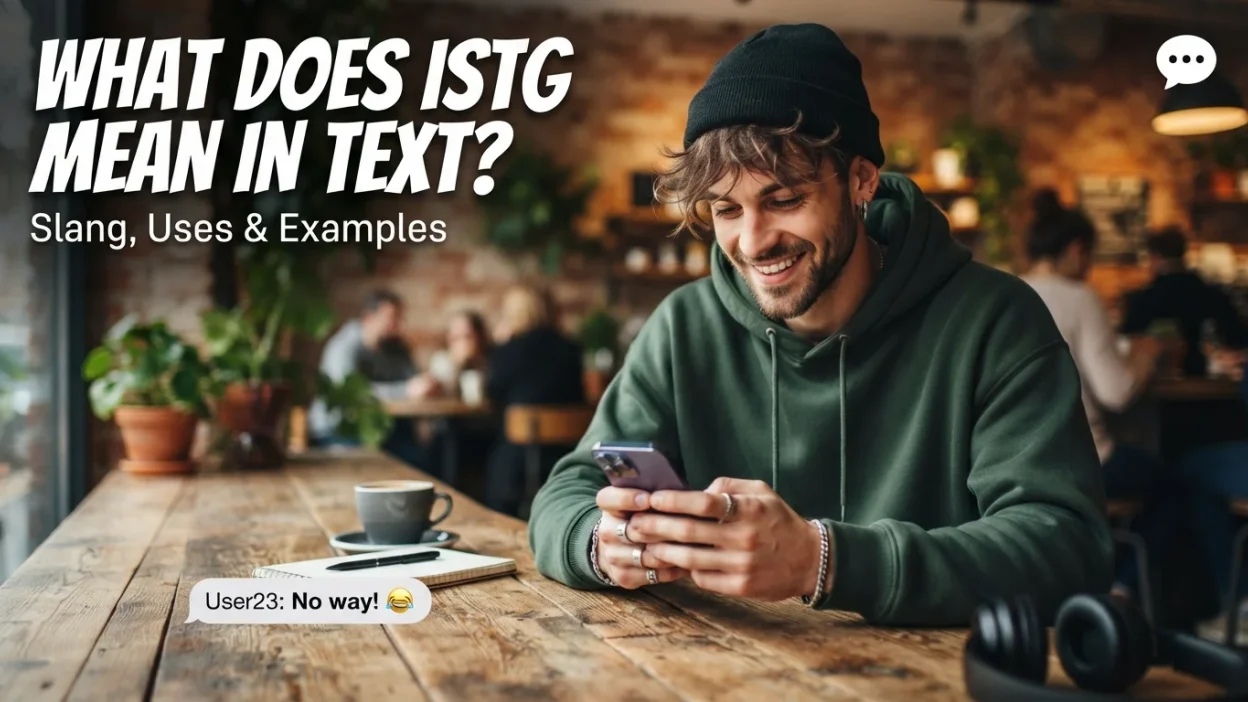
Have you received a message with ISTG and wondered what it means? ISTG stands for “I Swear to God.” People use this abbreviation in text messages and online conversations to show that they are serious, telling the truth, or feeling frustrated.
For example, someone might text, “ISTG, I didn’t take your phone.” This means the person strongly wants you to believe what they are saying.
This abbreviation is common on Snapchat, Instagram, TikTok, and WhatsApp. Its tone can change depending on the situation. Sometimes, it shows honesty. In other cases, it expresses anger, excitement, or disbelief.
Let’s explore its meaning, common uses, examples, and natural replies.
🔤 What Does ISTG Stand For?
ISTG stands for “I Swear to God.” It is an informal abbreviation that adds emphasis to a statement or emotion.
Here is what each letter represents:
- I = I
- S = Swear
- T = To
- G = God
People type these four letters instead of writing the complete phrase. As a result, conversations become quicker and more casual.
For example:
- “ISTG, I’m telling the truth.”
- “ISTG, that movie was amazing.”
- “ISTG, you’re making me laugh.”
- “ISTG, I can’t do this again.”
In each example, the sender uses the expression to make their message stronger.
📱 How People Use It in Text Messages
In texting, this abbreviation usually expresses honesty, frustration, excitement, or surprise. However, the exact emotion depends on the conversation.
1. To Show Honesty
Someone may use it when they want another person to believe them.
Example:
- Friend: “Did you break my headphones?”
- You: “ISTG, I didn’t touch them.”
Here, the sender strongly denies doing something.
2. To Express Frustration
People also use it when they feel annoyed or tired of a situation.
Example:
- “ISTG, my internet stops working every time I need it.”
The message shows that the person is frustrated.
3. To Show Excitement
The abbreviation can also appear in positive conversations.
Example:
- “ISTG, that concert was the best night ever!”
Here, the sender emphasizes how much they enjoyed the experience.
4. To Express Surprise
Someone might type it after something unexpected happens.
Example:
- “ISTG, I never expected that ending!”
It adds extra emotion to the reaction.
📲 How Is It Used on Snapchat, Instagram, and TikTok?
The abbreviation generally keeps the same meaning across social media platforms. However, people use it in different types of posts and conversations.
- Snapchat: Friends use it in private messages and snaps to show honesty or frustration.
- Instagram: Users add it to comments, captions, and direct messages to emphasize their reactions.
- TikTok: Creators and viewers use it in comments when reacting strongly to videos.
- WhatsApp: People include it in everyday chats when they want to sound serious or express an emotion.
For example, someone might comment, “ISTG, this is the funniest video I’ve seen today.”
It is not a special feature of any platform. Instead, it is a popular form of internet slang.
❤️ What Does It Mean When a Girl Sends ISTG?
If a girl sends you this abbreviation, she usually wants to emphasize what she is saying.
Her message could express honesty, excitement, frustration, or surprise.
For example:
- You: “Are you really coming tomorrow?”
- Her: “ISTG, yes! I’ll be there.”
She is strongly confirming her statement.
In another conversation, she might say, “ISTG, you’re so funny.” This could simply be a playful compliment.
Remember, it does not automatically mean romantic interest. Look at the rest of the conversation to understand her tone.
👨 What Does It Mean When a Guy Sends It?
When a guy uses this expression, he generally wants to emphasize a statement.
He may use it to confirm a promise, express frustration, or react to something surprising.
For example:
- You: “You really finished the whole pizza?”
- Him: “ISTG, I was hungry.”
The abbreviation makes his response more expressive. Its meaning depends on the situation, not the sender’s gender.
💬 Common Situations and Their Meanings
The same abbreviation can express several emotions. Here are some examples:
| Situation | Example | Intended Meaning |
|---|---|---|
| Honesty | “ISTG, I didn’t do it.” | I am telling the truth. |
| Frustration | “ISTG, this is so annoying.” | I am very frustrated. |
| Excitement | “ISTG, that was amazing!” | I really enjoyed it. |
| Surprise | “ISTG, I wasn’t expecting that.” | I am genuinely surprised. |
| Promise | “ISTG, I’ll help you tomorrow.” | I strongly promise to help. |
📝 Real-Life Conversation Examples
These conversations show how people use the abbreviation in everyday messages.
- Alex: “Did you eat my chocolate?”
- Sam: “ISTG, I didn’t!”
- Mia: “Why are you upset?”
- Emma: “ISTG, I’ve been waiting for an hour.”
- Jake: “Did you enjoy the concert?”
- Ryan: “ISTG, it was incredible!”
- Lily: “I accidentally sent the message to the wrong group.”
- Sara: “ISTG 😂 How did that happen?”
- Tom: “Will you return my book tomorrow?”
- Ben: “ISTG, I’ll bring it.”
🤔 Is ISTG Rude or Offensive?
The abbreviation is not usually considered a traditional swear word. However, it includes a reference to God, so some people may find it inappropriate or uncomfortable.
It can also sound intense during an argument.
For example, “ISTG, stop doing that!” may sound angry or threatening, depending on the conversation.
If you want a more neutral alternative, try:
- “I promise.”
- “Honestly.”
- “I’m serious.”
- “I really mean it.”
- “I am telling the truth.”
These expressions communicate similar feelings without using religious language.
🔄 ISTG vs. ONG vs. FR
These three abbreviations appear frequently in online conversations. They can express similar feelings, but their meanings are different.
| Abbreviation | Full Form | Meaning |
|---|---|---|
| ISTG | I Swear to God | Strong emphasis or sincerity |
| ONG | On God | Emphasizing honesty or agreement |
| FR | For Real | Showing agreement or seriousness |
| NGL | Not Gonna Lie | Introducing an honest opinion |
| TBH | To Be Honest | Sharing a genuine thought |
For example, you might write “ISTG, I’m telling the truth” to emphasize honesty. On the other hand, “FR, that was amazing” expresses genuine agreement or excitement.
💡 How Should You Reply to This Message?
Your response depends on the message and the sender’s emotions.
If someone uses the abbreviation to tell the truth, you can acknowledge their statement. If they feel frustrated, a supportive response may work better.
Here are some natural replies:
- “Okay, I believe you.”
- “I know you’re serious.”
- “Haha, I get it!”
- “Calm down, it’s okay.”
- “I understand what you mean.”
- “Really?
- “I hope everything works out.”
Choose a reply that matches the conversation instead of focusing only on the abbreviation.
❓ Frequently Asked Questions
1. What does ISTG mean in simple words?
ISTG means “I Swear to God.” People use it to show that they are serious, telling the truth, or expressing a strong emotion.
2. What does ISTG mean on Snapchat?
On Snapchat, it has the same meaning: “I Swear to God.” Friends use it in snaps and chats to emphasize their messages.
3. What does ISTG mean from a girl?
It usually means she wants to emphasize something she is saying. She may be expressing honesty, excitement, frustration, or surprise.
4. What does ISTG mean from a guy?
A guy generally uses it to show sincerity or emphasize a statement. Its meaning depends on the conversation rather than the sender’s gender.
5. Is ISTG a bad word?
It is not a traditional swear word, but it includes a religious reference. Some people may find it inappropriate, so consider your audience before using it.
6. Does ISTG mean I am serious?
Yes. People often use it to show that they are serious or want someone to believe their statement.
7. What is the difference between ISTG and ONG?
ISTG means “I Swear to God,” while ONG means “On God.” Both can emphasize honesty or agreement, but they use different phrases.
8. Can I use ISTG in professional messages?
It is better to avoid it in formal emails and workplace communication. Use alternatives such as “I promise,” “Honestly,” or “I can confirm” instead.
🎯 Conclusion
ISTG stands for “I Swear to God.” People use it in text messages, social media comments, and online chats to emphasize honesty, frustration, excitement, or surprise.
Although it is common in casual conversations, its tone depends on the situation. When someone sends you this abbreviation, read the full message to understand whether they are being serious, joking, or expressing strong emotions.

Emily Carter is a passionate writer who enjoys creating engaging, informative and easy-to-read content for a wide audience. She focuses on delivering helpful insights and fresh ideas that inform, inspire and connect with readers.