The phrase in conclusion synonym is one of the most recognizable transition signals in English writing. It tells readers that the end is near and that a final summary or judgment is about to follow. Despite its usefulness, the expression has become so common that it often feels formulaic, even mechanical. Writers who rely on it repeatedly risk sounding robotic rather than thoughtful.
Fortunately, English offers a rich variety of alternatives that can make your endings more precise, more engaging, and better suited to your audience. This guide covers the most effective synonyms across formal, academic, and casual contexts, along with practical guidance on choosing the right one for your writing situation.
What “In Conclusion” Actually Does
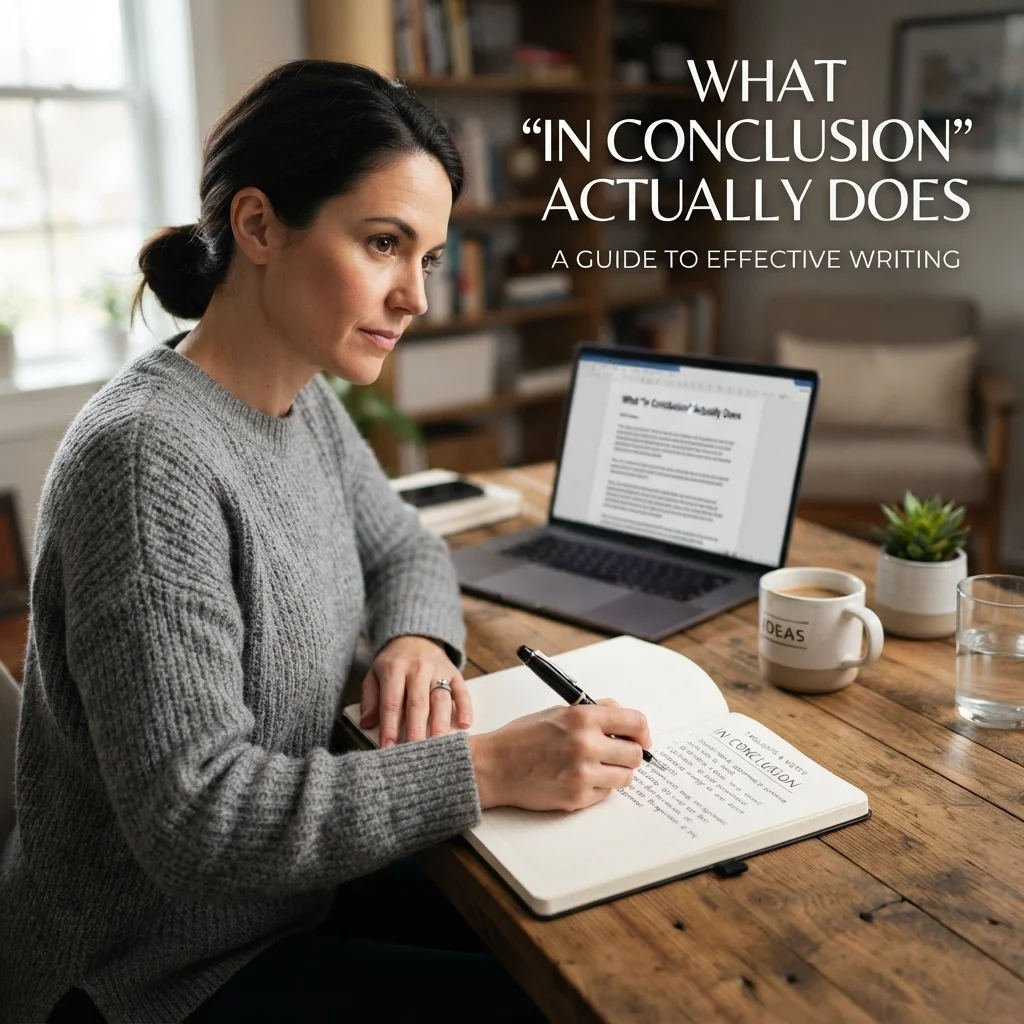
Before choosing a replacement, it helps to understand the function of this phrase. According to Collins Dictionary, you say in conclusion to indicate that what you are about to say is the last thing you want to say. The phrase serves two purposes simultaneously: it signals the end of a piece, and it introduces a final thought, summary, or evaluation.
That dual function matters because not every synonym carries both meanings. Some alternatives emphasize summarization, while others stress logical consequence or finality. Choosing well depends on what your conclusion actually does.
Formal Synonyms for Professional and Academic Writing

Formal writing, including research papers, business reports, and official correspondence, benefits from synonyms that sound polished without becoming stilted. The following options work well in these settings.
In Summary
In summary signals that you are about to condense the main points into a brief restatement. It works best when your conclusion genuinely summarizes rather than introduces new material. For example: “In summary, the data indicate a consistent decline in customer retention over three consecutive quarters.”
To Summarize
This phrase functions almost identically to in summary, though it carries a slightly more instructional tone. It suits situations where you are walking readers through a logical progression and want to consolidate the key takeaways.
Ultimately
Ultimately emphasizes the most fundamental or decisive point in your argument. It works particularly well when your conclusion delivers a final judgment or call to action rather than a mere recap. Consider: “Ultimately, the success of the initiative depends on sustained leadership commitment.”
In Closing
In closing is common in speeches, presentations, and letters. It sounds slightly more conversational than in summary while remaining appropriate for professional contexts. A presenter might say: “In closing, I want to thank the team for their extraordinary effort this quarter.”
To Conclude
To conclude is a direct verbal alternative that transitions smoothly into final remarks. It reads as slightly more natural than in conclusion in many contexts, partly because the infinitive form feels less like a fixed formula.
In the Final Analysis
This phrase signals that you have weighed multiple factors and reached a considered judgment. It suits analytical writing where you have compared competing perspectives. For instance: “In the final analysis, neither policy alone addresses the underlying economic pressures.”
Overall
Overall provides a broad, summarizing transition that works across many formal contexts. It functions as a single-word alternative that avoids the heaviness of multi-word phrases. A report might conclude: “Overall, the project met its primary objectives while exceeding budget expectations.”
Casual and Conversational Alternatives

Not every piece of writing requires formal register. Emails, blog posts, informal presentations, and conversational pieces benefit from synonyms that sound relaxed and natural.
In a Nutshell
In a nutshell signals a concise, stripped-down summary. It works best in informal writing where you want to convey the essence of your argument without ceremony. For example: “In a nutshell, we need more time and fewer meetings.”
All in All
This phrase means “considering everything” and carries a friendly, balanced tone. It suits reflective conclusions in casual writing: “All in all, the conference was worth attending despite the travel delays.”
At the End of the Day
At the end of the day emphasizes what matters most after all factors are considered. It has become somewhat clichéd in business writing, so use it sparingly. In casual conversation or informal articles, it still works effectively.
Long Story Short
This phrase suits highly conversational contexts where brevity and directness matter. It signals that you are cutting through details to reach the essential point. Bloggers and newsletter writers often use it to maintain an approachable voice.
To Wrap Things Up
To wrap things up feels active and conversational. It works well in presentations, video scripts, and informal articles where a relaxed closing suits the overall tone.
The Bottom Line
This phrase directs attention to the single most important takeaway. It functions as both a conclusion signal and an emphasis marker. In business writing, it often introduces a decisive statement: “The bottom line is that we cannot afford to delay the launch.”
Academic and Argumentative Writing
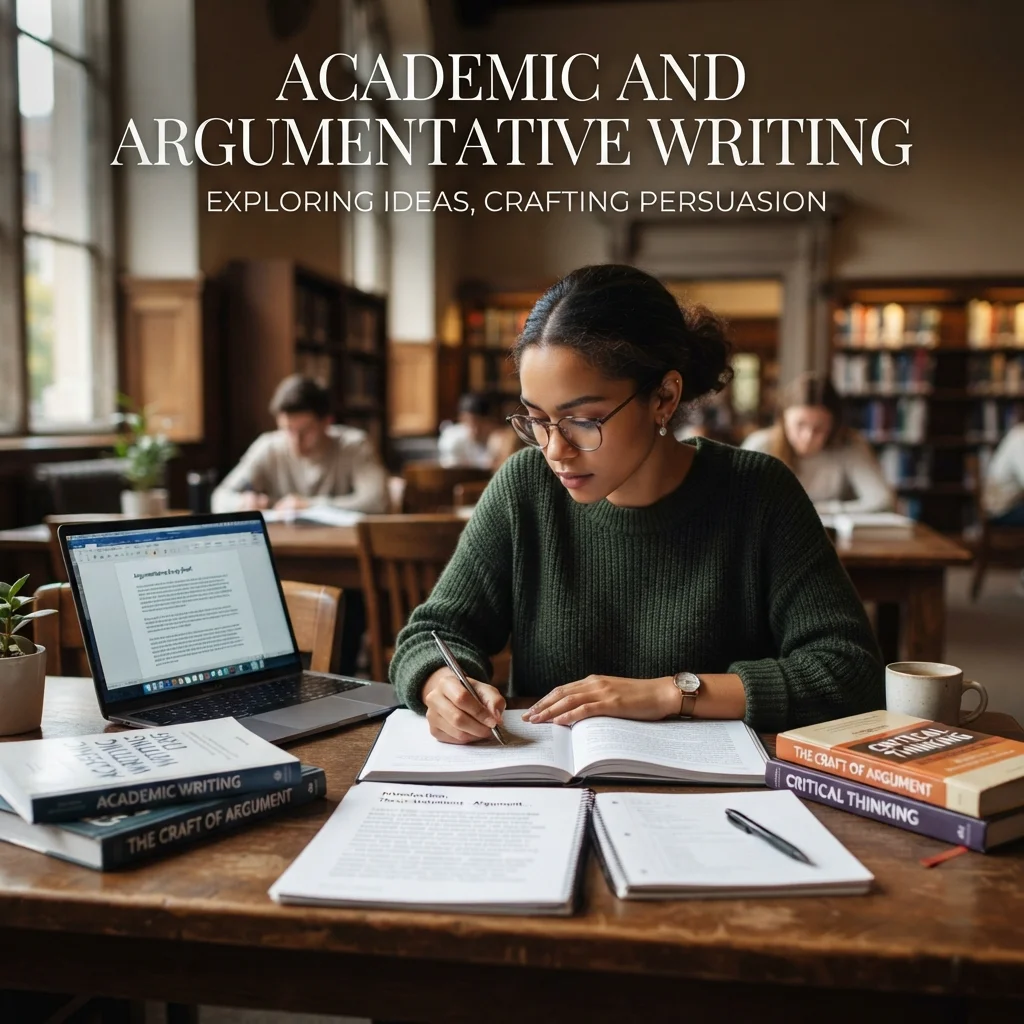
Academic writing has its own conventions for conclusions. The goal is often to demonstrate that your evidence supports your thesis rather than merely to restate points.
Thus
Thus signals a logical consequence. It works well in argumentative essays where your conclusion follows necessarily from your premises. The word carries a formal, almost mathematical precision.
Therefore
Therefore similarly indicates that your conclusion is a logical result of what came before. It appears frequently in academic writing because it explicitly marks causal or inferential relationships.
It Can Be Concluded That
This phrase explicitly frames your final statement as an inference from the evidence presented. It suits research papers where you want to distinguish between what you have demonstrated and what remains speculative.
Consequently
Consequently emphasizes the result or outcome of the preceding argument. It works well when your conclusion describes an implication or effect rather than a simple summary.
Hence
Like thus and therefore, hence marks a logical inference. It tends to appear in more formal or technical writing and carries a slightly archaic flavor that some writers find elegant.
As Has Been Demonstrated
This phrase asserts that your evidence has proven your point. It works well in persuasive essays where you want to close with confidence. Use it only when you have genuinely built a strong case.
Choosing the Right Synonym for Your Context

Selecting the best alternative depends on several factors beyond formality.
Purpose of the conclusion matters. If you are summarizing, in summary or to summarize fits naturally. If you are delivering a final judgment, ultimately or in the final analysis works better. If you are drawing a logical inference, thus or therefore signals that relationship clearly.
Audience expectations matter. Academic readers expect certain conventions. Business readers value clarity and directness. General audiences appreciate plain language. Match your synonym to what your readers will find natural.
Repetition matters. If you have used in conclusion earlier in the same document, choose a different alternative. Varying your transitions keeps your writing fresh and prevents reader fatigue.
Sentence rhythm matters. Some synonyms are short and punchy (thus, overall), while others are longer and more ceremonial (in the final analysis, by way of conclusion). Read your sentence aloud to check whether the transition flows naturally.
Common Mistakes to Avoid

Writers sometimes reach for synonyms that do not quite fit their meaning.
Using “in summary” when you are not summarizing. If your final paragraph introduces a new idea or a call to action rather than condensing previous points, in summary misleads readers. Choose ultimately or in closing instead.
Using “lastly” for a full conclusion. Lastly introduces the final item in a list or sequence. It works poorly as a signal for an entire concluding section. Reserve it for enumerations.
Overusing informal phrases in formal writing. In a nutshell or long story short can feel jarring in a research paper or legal document. Save these for contexts where a conversational tone is appropriate.
Adding transitions mechanically. A synonym should connect ideas logically, not merely decorate a paragraph. If the transition does not clarify the relationship between your conclusion and the preceding text, omit it or rephrase the sentence.
Practical Examples in Context
Seeing synonyms in action helps clarify their appropriate use.
Academic conclusion: “Thus, the experimental results support the hypothesis that temperature influences enzyme activity. These findings suggest that further research should examine the effect across a wider range of conditions.”
Business report: “Overall, the marketing campaign generated a 15% increase in qualified leads. The bottom line is that the strategy warrants expansion into two additional regions.”
Informal blog post: “In a nutshell, learning to cook at home saves money and improves your diet. To wrap things up, start with three simple recipes and build from there.”
Persuasive essay: “In the final analysis, the evidence demonstrates that early intervention produces better outcomes than remediation. Consequently, policymakers should prioritize funding for preventative programs.”
A Note on Avoiding Overuse

The best conclusion may not require a transitional phrase at all. Sometimes the most powerful ending simply states your final point without announcing that it is final. Readers recognize conclusions through content, not just through signal words.
If you find yourself cycling through synonyms mechanically, consider whether your conclusion needs a transition phrase at all. A well-constructed final paragraph often signals its function through its position and content without relying on in conclusion or any substitute.
Frequently Asked Questions
What is the best synonym for “in conclusion” in academic writing?
In summary, to summarize, and ultimately are among the safest choices for academic writing. Thus and therefore work well when your conclusion follows logically from your evidence.
Is “in conclusion” overused?
Yes, many writing guides consider it overused, particularly in student essays. Varying your transitions with alternatives like in closing or ultimately can make your writing feel less formulaic.
Can I use “finally” instead of “in conclusion”?
Finally works when you are introducing the last point in a sequence, but it does not always capture the summarizing function of a full conclusion. Use it for lists or multi-part arguments, not as a general substitute.
What is a good informal alternative?
In a nutshell, all in all, and to wrap things up work well in casual writing. Choose based on whether you are summarizing, balancing factors, or simply ending.
Is “at the end of the day” too informal for business writing?
It can sound clichéd in professional contexts. Ultimately or the bottom line often work better for business audiences while preserving a direct tone.
Can I skip the transition phrase entirely?
Yes. Many strong conclusions begin with a direct statement rather than a signal word. If your final paragraph clearly summarizes or delivers a judgment, readers will recognize its function without an explicit marker.
Final Thoughts
In conclusion remains a perfectly acceptable phrase. The problem is not the phrase itself but its overuse and its tendency to announce an ending rather than create one. The synonyms above give you options for every register and purpose, from the formal precision of thus to the relaxed clarity of in a nutshell.
The most important lesson is this: choose your closing transition based on what your conclusion actually does. A summary needs in summary. A judgment needs ultimately. A logical inference needs therefore. When the phrase matches the function, the ending feels inevitable rather than mechanical.

Emily Carter is a passionate writer who enjoys creating engaging, informative and easy-to-read content for a wide audience. She focuses on delivering helpful insights and fresh ideas that inform, inspire and connect with readers.